September 16, 2025 – Bible Recap Journal

Daniel 10–12

Common Theme

God reveals detailed visions of future conflict, persecution, and deliverance, reminding His people that He is sovereign over history and that their suffering has purpose. These chapters underscore the spiritual battle behind earthly events and the ultimate triumph of God’s kingdom.

Questions

  • How does knowing that unseen spiritual battles are occurring impact the way you pray or persevere through hardship?
  • What encouragement can you draw from the promise that those whose names are written in the book will be delivered?

God Shot

God is revealed as the One who commands angelic armies and knows the future with perfect clarity. He is not distant from suffering but is actively engaged in the spiritual and historical battles that shape His redemptive plan.


Deeper

Daniel 10

Daniel recounts a vision received after three weeks of mourning and prayer for understanding. On the twenty-fourth day of the first month, he sees a terrifying heavenly being resembling a human, dressed in linen and gold, whose voice is powerful. Although those around him do not see the vision, they sense its might and flee. The supernatural being reassures Daniel, who is described as precious to God, and reveals a cosmic battle involving the "prince of the Persian kingdom," a supernatural entity opposing divine forces. This conflict illustrates the struggles faced by God’s people. The messenger announces that he will share what is written in the "Book of Truth," indicating that God has a plan for history, culminating in the rescue of His people. The text emphasizes the need for believers to recognize their reliance on God’s strength in spiritual battles, urging them to don the armor of God and turn to Jesus as their ultimate source of power against evil.

Daniel 11

The passage outlines a prophetic narrative concerning the historical events involving Persia, Greece, and the subsequent rulers, particularly focusing on the conflicts between the Ptolemies and Seleucids. The text begins by affirming the truth of the prophecy, which Daniel hears in the sixth century, detailing events that span several centuries. It identifies Alexander the Great and his successors, leading to the struggles for control over Palestine.

The narrative highlights the reign of Antiochus III and his son Antiochus IV Epiphanes, who aggressively opposed the worship practices of the Jewish people, culminating in the desecration of the temple. The text describes the division among the Jewish people regarding their response to Antiochus’s Hellenization efforts.

Daniel 12

As the prophecy progresses, it shifts to a broader eschatological perspective, suggesting a climactic king who embodies pride and rebellion against God. The passage emphasizes the ultimate conflict between good and evil, culminating in the salvation of God’s people, as indicated in chapter 12. The text concludes with a celestial dialogue about the future, underscoring the mystery of God’s plan and the assurance of divine control despite present chaos.

The application stresses God’s sovereignty amidst contemporary turmoil, encouraging believers to trust in His control over the world, regardless of societal challenges. The message reassures that, like in ancient times, God remains in command today, urging a response of faith rather than panic.


Deeper excerpt from NIV Application Commentary, One-Volume Edition.

Restoring My Mother’s Bible


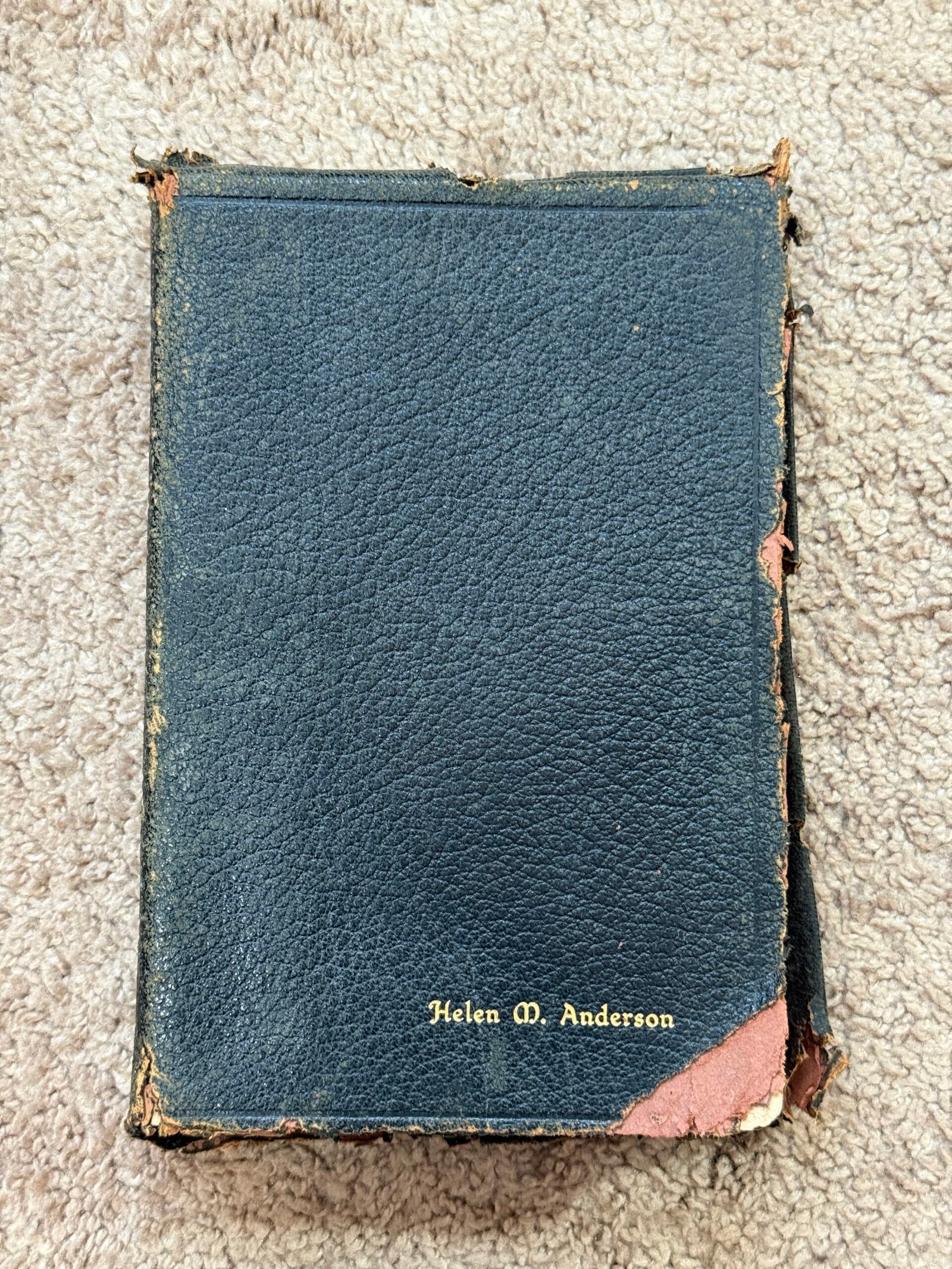
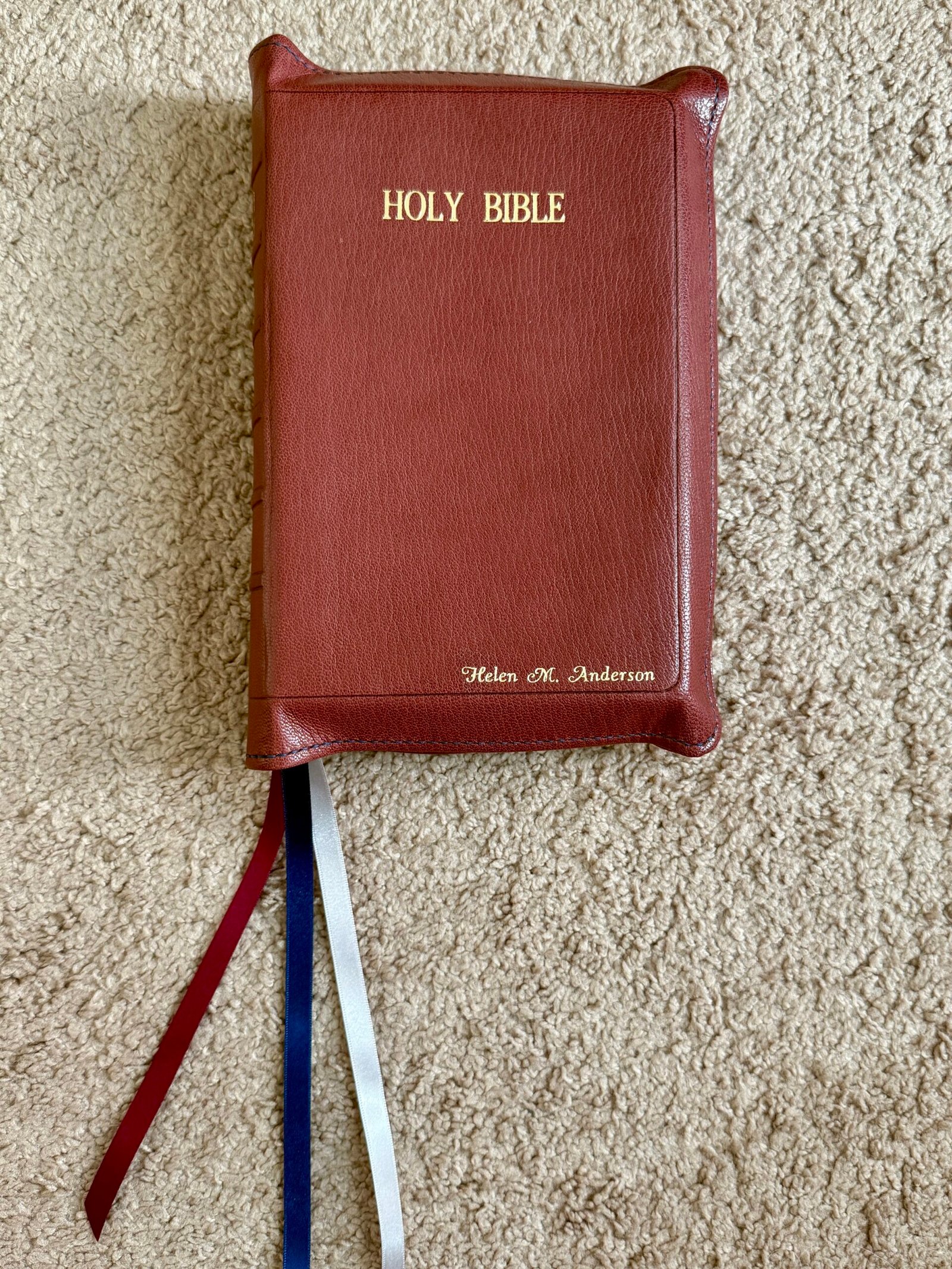
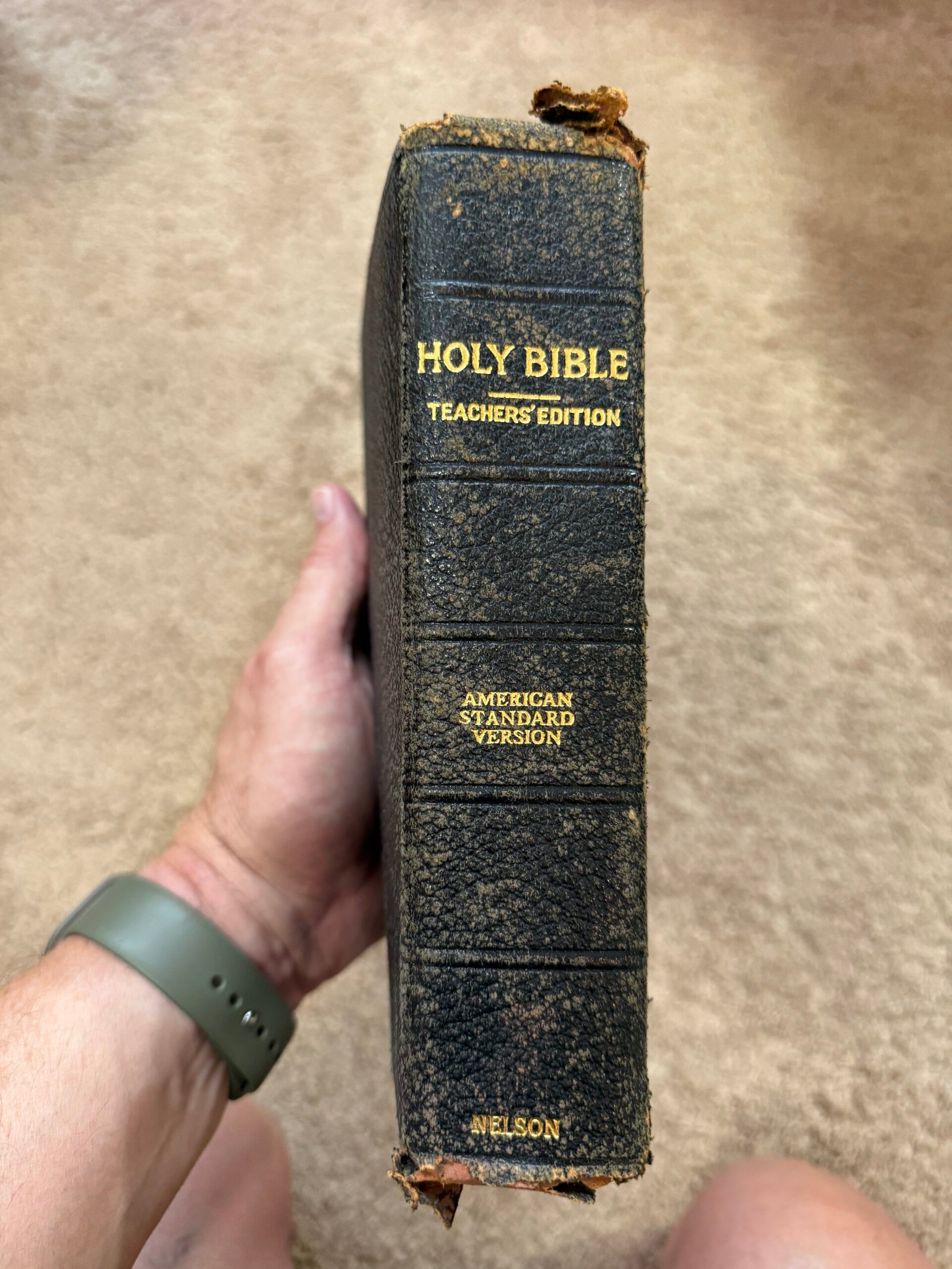
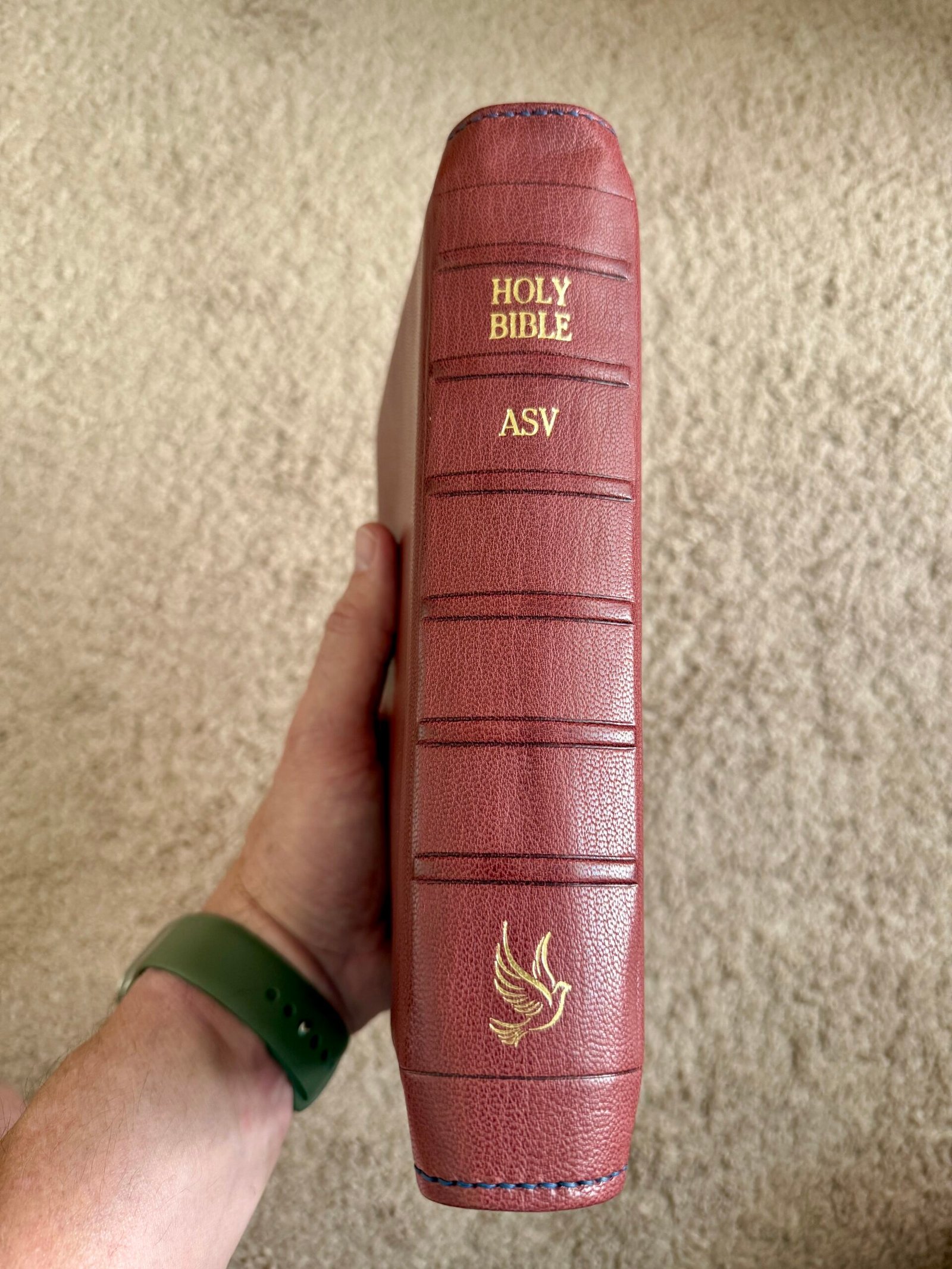
In Honor of My Mom, Helen, Whose Birthday is Today, September 16, 1931


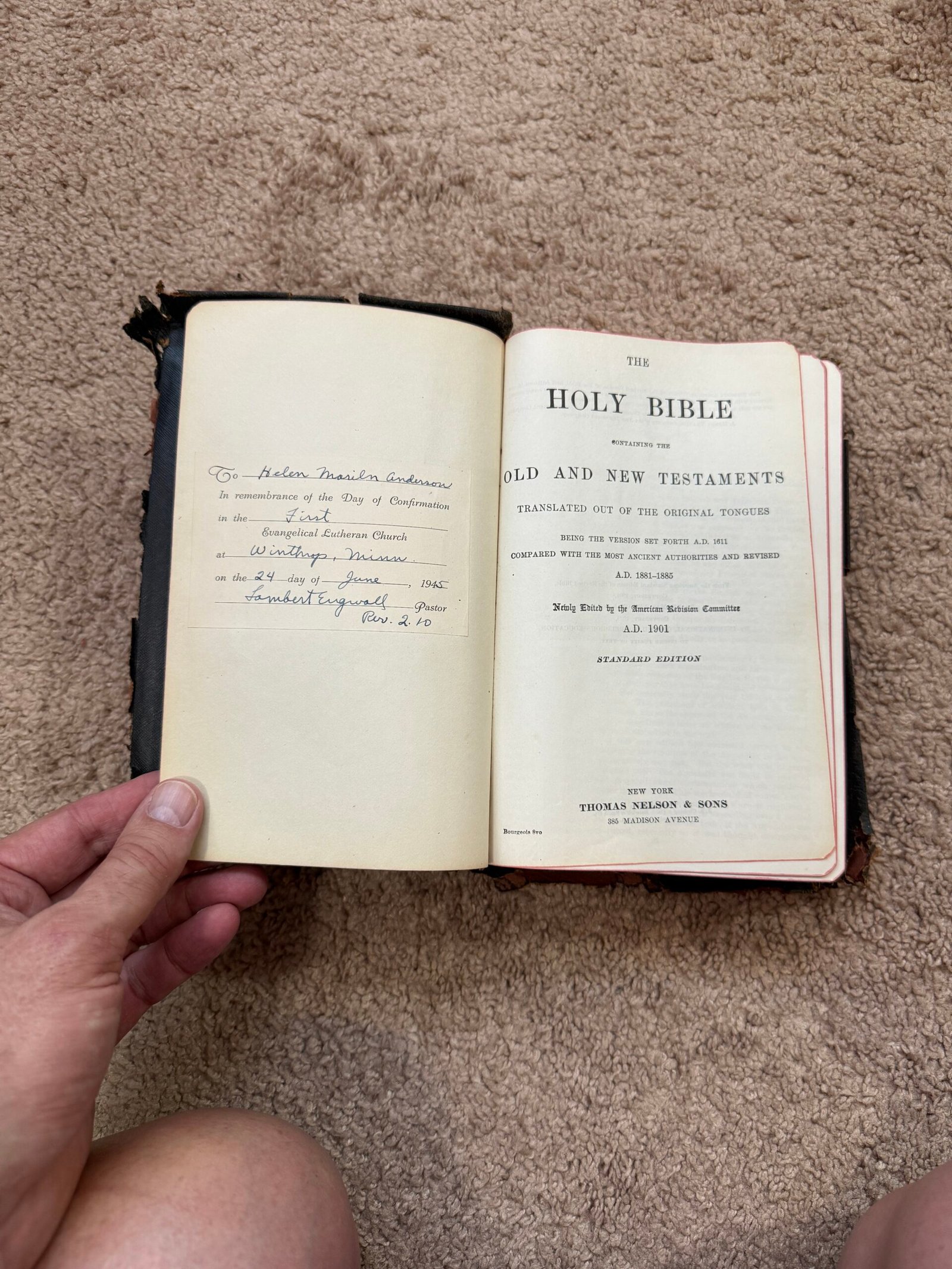
After my mom passed away in 2020, my older sister Barb handed me my mother’s Bible that she had since her confirmation. It is such a meaningful reminder of Mom and how she cherished prayer. The original leather cover was in pretty rough condition, but the spiritual and emotional value of this Bible was beyond measure.

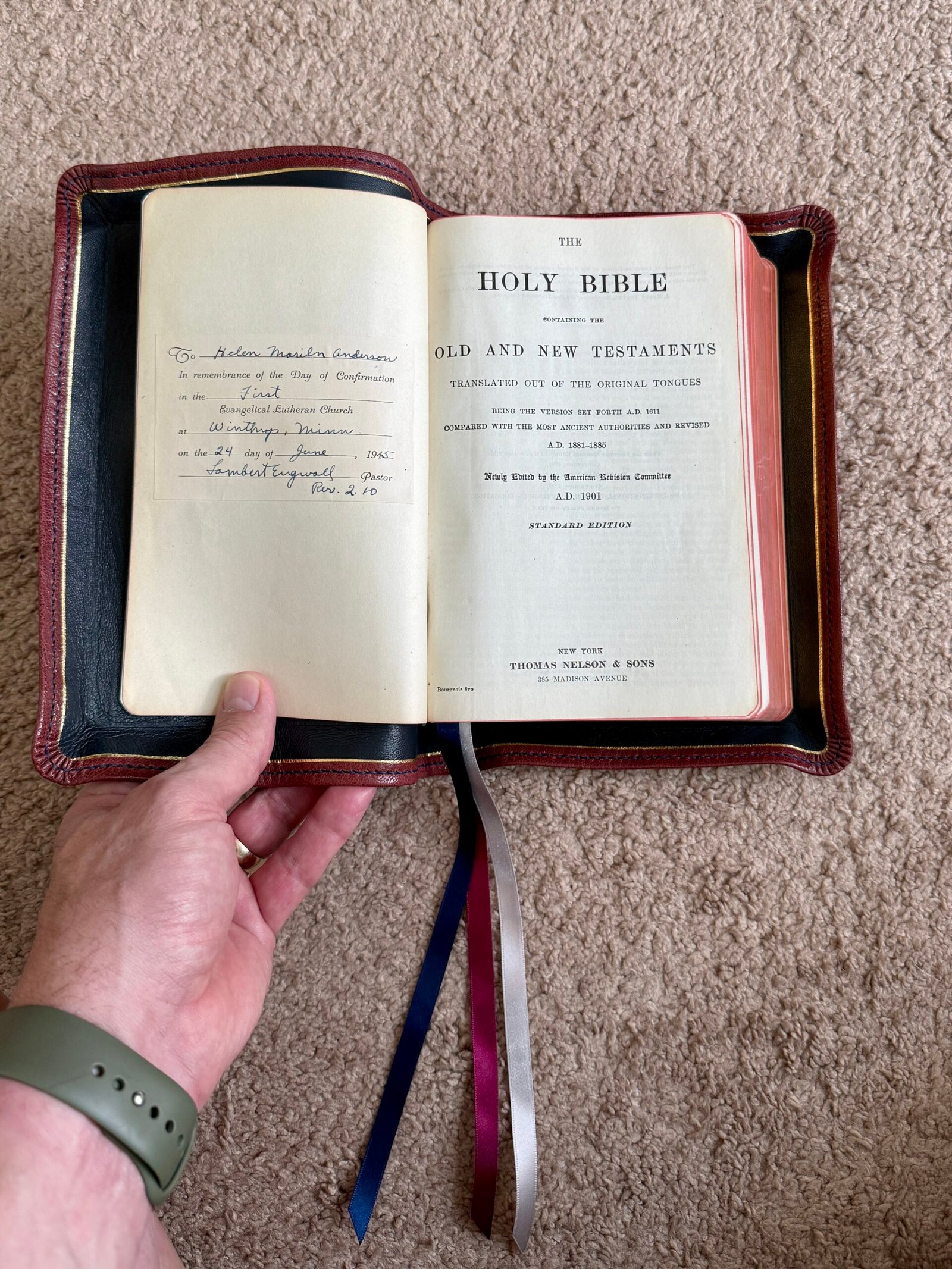
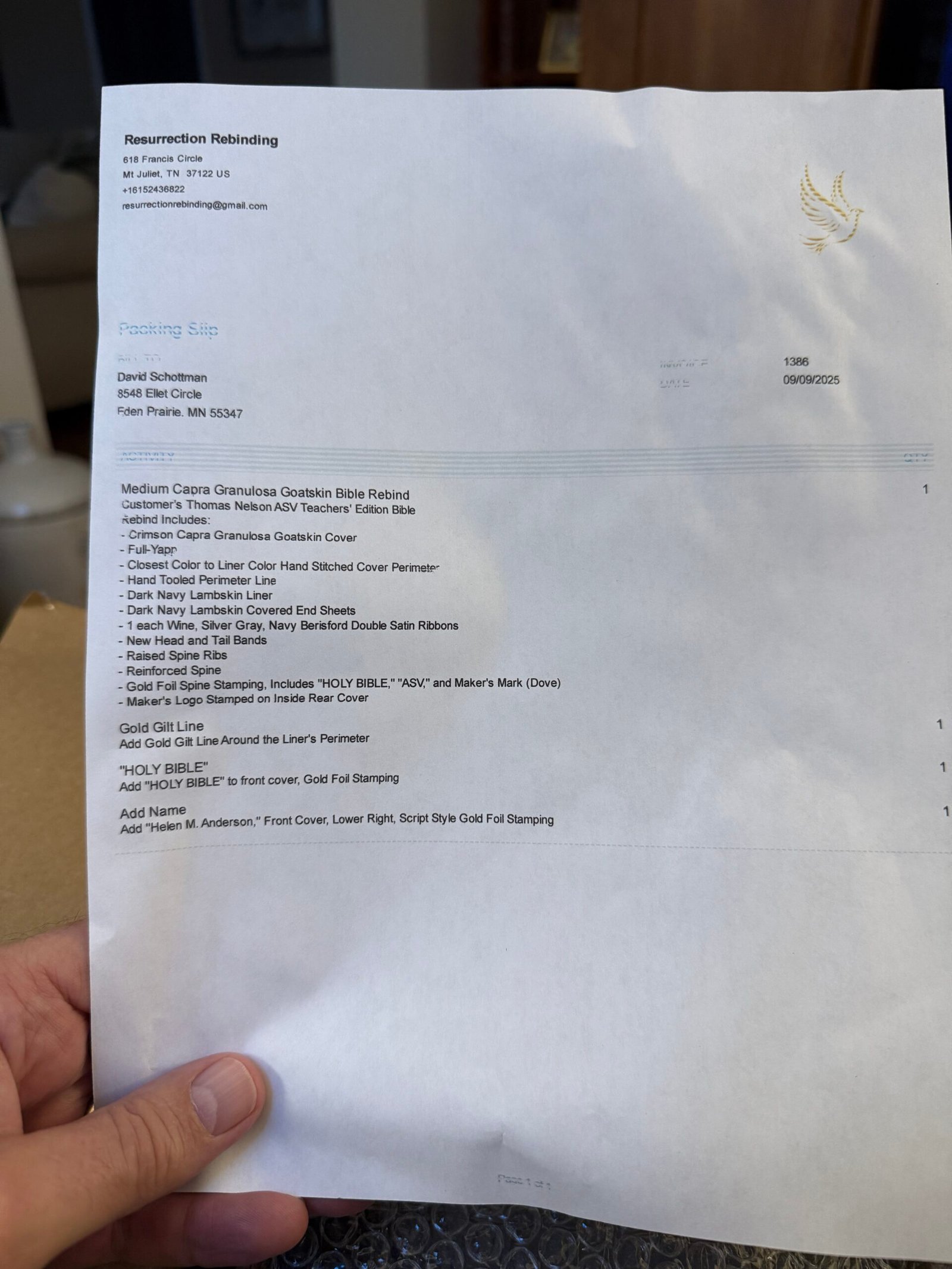
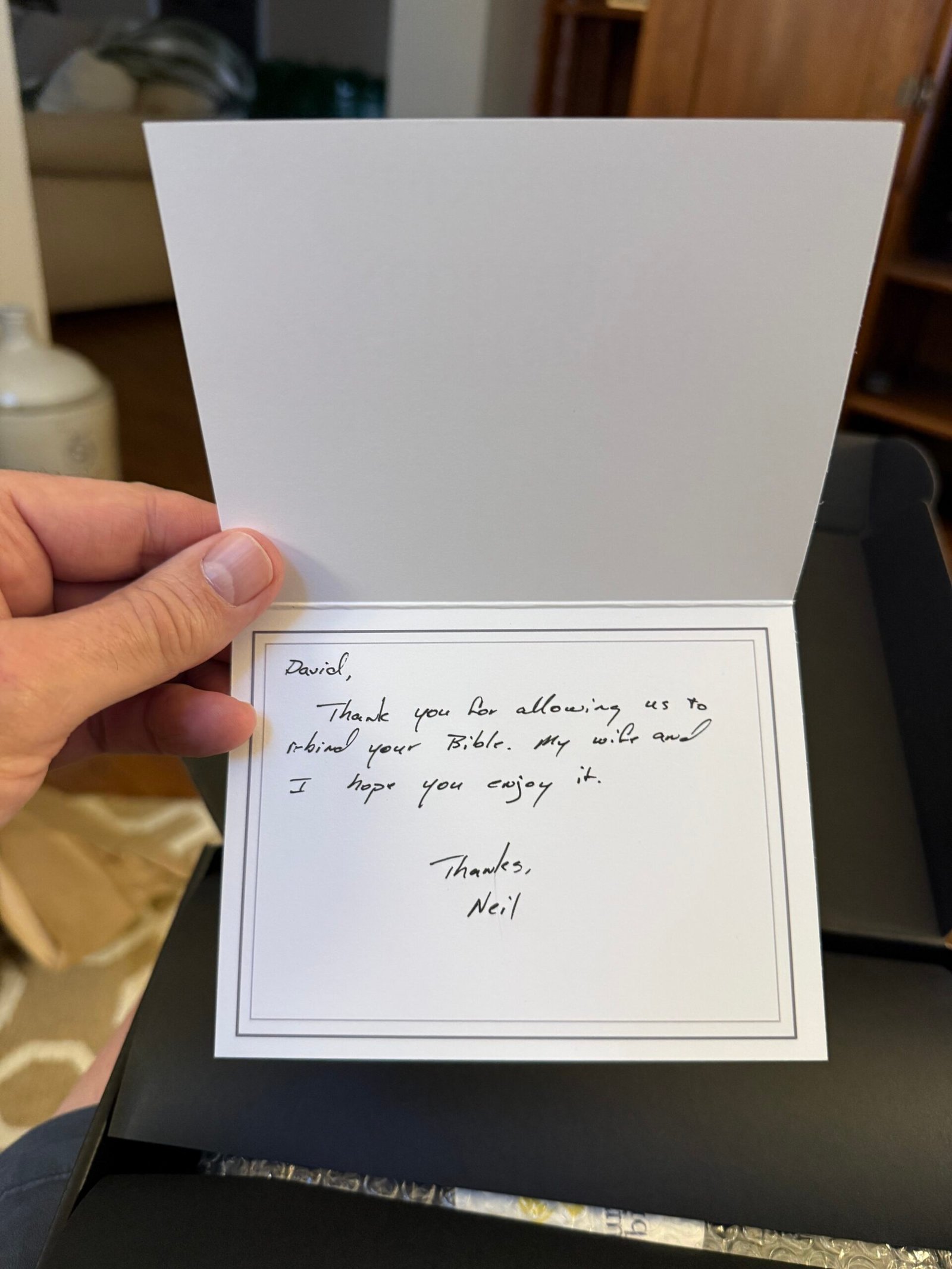
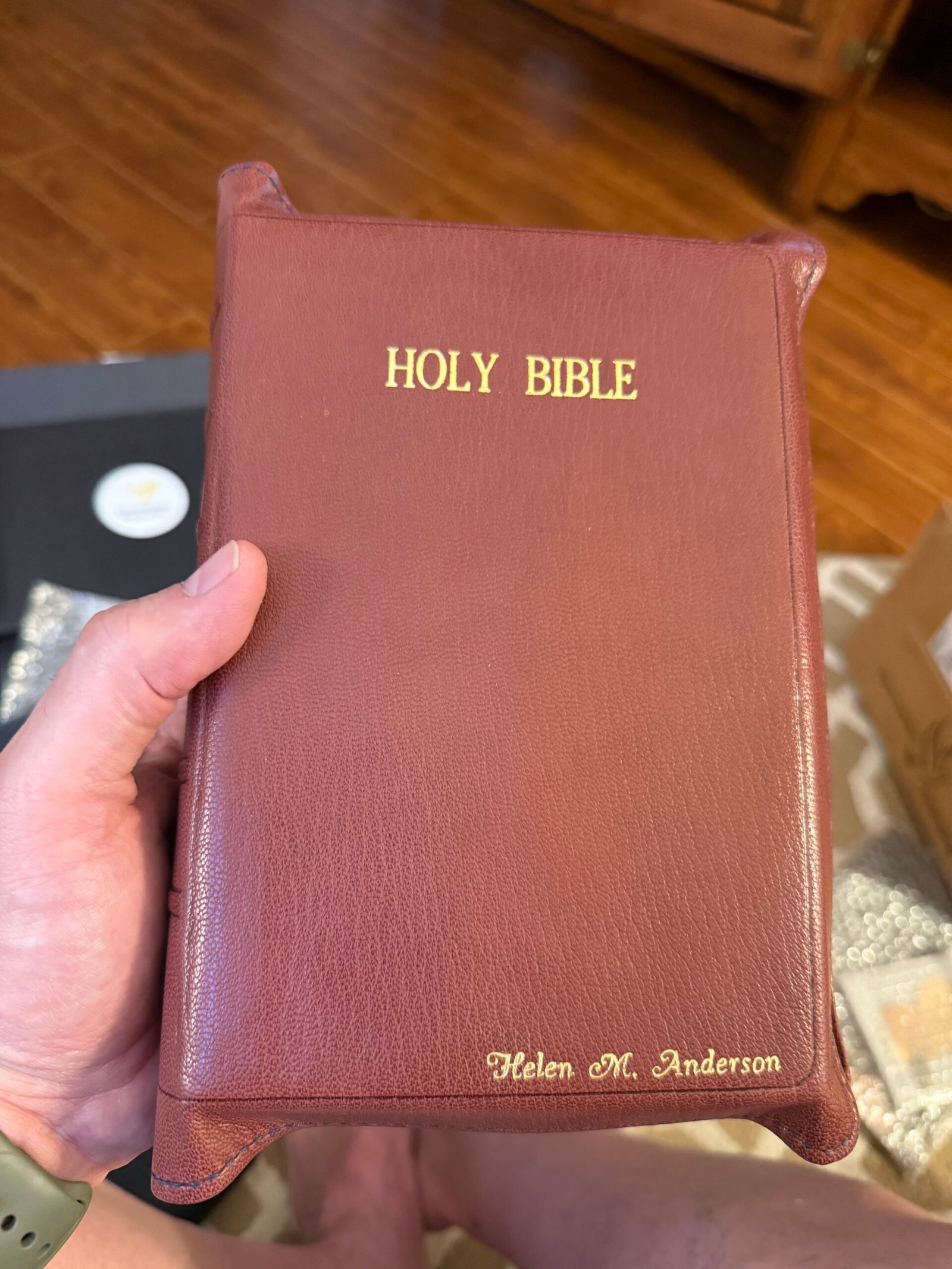
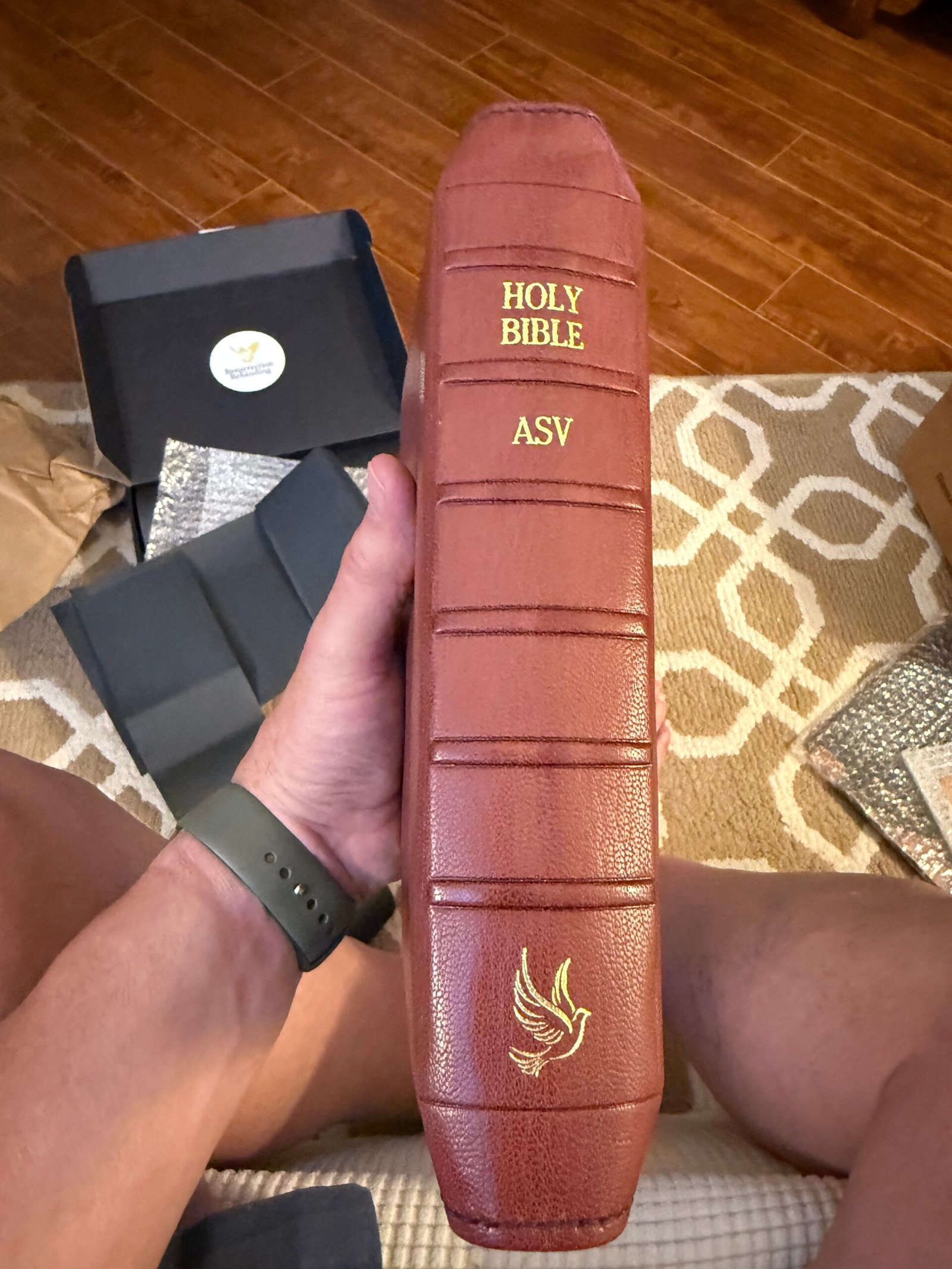
I found a respected Bible rebinder in Neil McCauley, owner of Resurrection Rebinding. They did such a wonderful job of restoring Mom’s Bible to a beautiful condition. Every time I read from this Bible, I will think of my mom.

Below is a visual journey from its original state to its masterfully restored form. Each “Before” image is immediately followed by its “After” counterpart for clear comparison.

Front Cover

Before

After

Back Cover

Before

After

Spine

Before

After

Inside Cover

Before

After

Presentation & Title Page

Before

After

Inside Back Cover

Before

After

Unboxing the Restored Bible

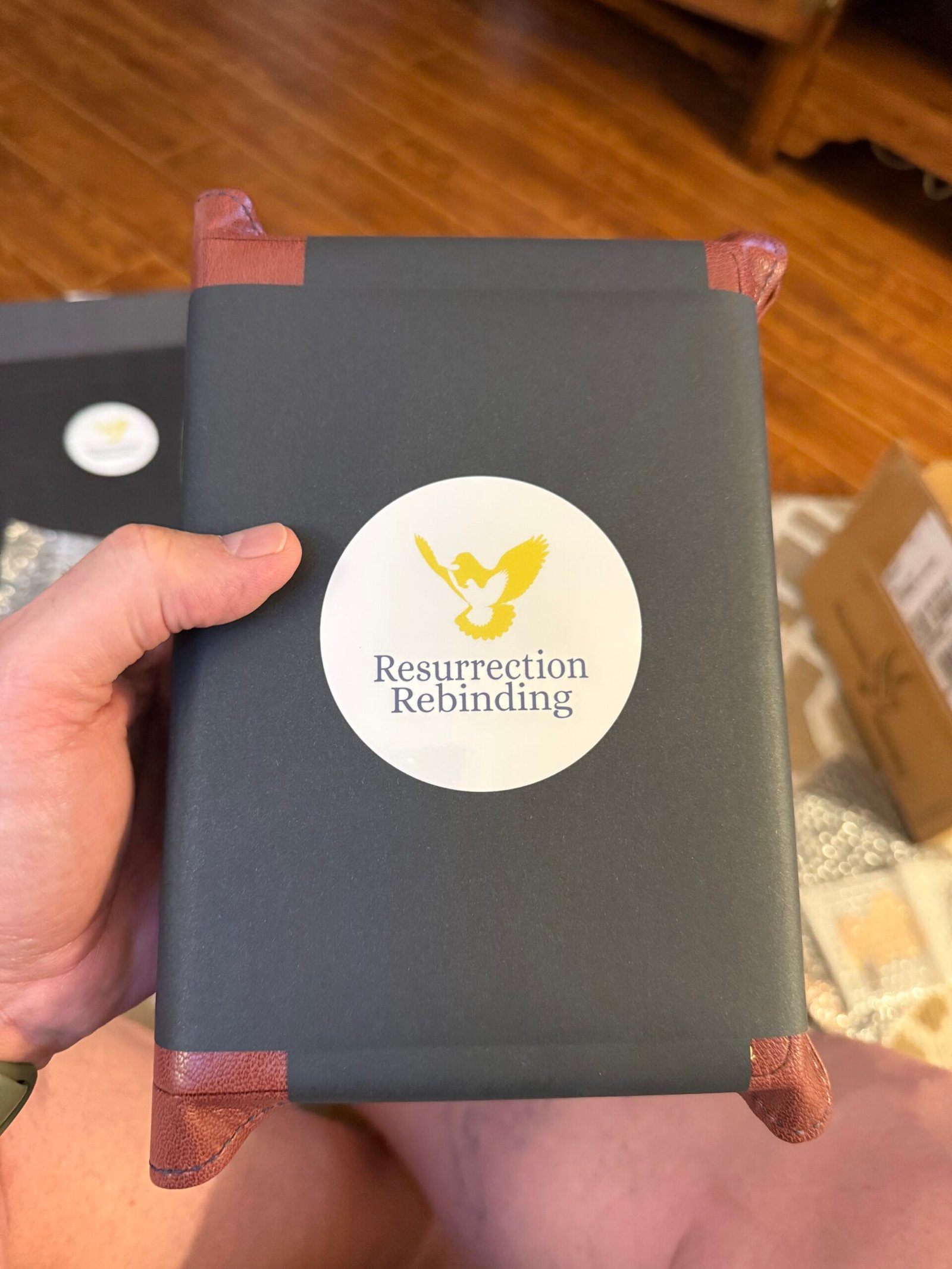
Fresh from Resurrection Rebinding.

Unboxing photo 1 Unboxing photo 2 Unboxing photo 3
Unboxing photo 4 Unboxing photo 5 Unboxing photo 6
Unboxing photo 7 Unboxing photo 8 Unboxing photo 9
Unboxing photo 10 Unboxing photo 11 Unboxing photo 12
Unboxing photo 13 Unboxing photo 14 Unboxing photo 15

Closing Thoughts

This transformation preserves not just a Bible, but a tangible piece of our family’s faith heritage. The craftsmanship honors both the Word it contains and the woman who treasured it. I’m so thankful for the care and excellence that went into this restoration—every time I open its pages, I remember my mom, her prayers, and her love for God’s Word.

September 15, 2025 – Bible Recap Journal

Daniel 7–9

Common Theme

God is sovereign over history and time, revealing future kingdoms and their downfall, culminating in His eternal rule. He responds to repentance and fulfills His promises despite overwhelming opposition and delay.

Questions

  • How does Daniel’s response to the visions (prayer, confession, intercession) shape your view of how to respond to difficult revelations from God?
  • What do these chapters teach us about God’s timeline versus our own expectations?

God Shot

God is the Ancient of Days, enthroned in holiness and judgment, ruling over all nations and kingdoms. He listens to humble prayer, sends divine messengers, and sovereignly sets the times for redemption and justice.


Deeper

Daniel 7

Daniel 7:1–28 marks a shift from court narrative to apocalyptic literature, requiring a different reading approach due to its metaphor-rich nature. Apocalyptic literature uses analogies to convey complex ideas, emphasizing caution in interpretation. Daniel’s vision begins with a chaotic sea, symbolizing horror and evil, from which four bizarre beasts emerge, representing forces opposing God. The first beast, resembling a lion with eagle wings, is interpreted as Babylon. The second, a bear, raises debate over its identification as Medo-Persia or Media. The third beast, a swift leopard, may symbolize the Persian army or Alexander the Great’s conquests. The fourth beast is less defined, often linked to Greece or Rome, depending on previous identifications.

The narrative transitions to a courtroom scene where the "Ancient of Days" represents God as judge, and "one like a son of man" signifies a divine figure, emphasizing the contrast between depraved human kingdoms and the divine realm. The fourth beast and its horns are debated, with interpretations suggesting they represent Greece or Rome, and the climactic horn linked to Antiochus IV or the New Testament’s antichrist.

The phrase "a time, times and half a time" is often interpreted as three and a half years, though its vagueness suggests a broader meaning. Ultimately, Daniel 7 illustrates the pervasive nature of human evil, resonating with Christians who face oppressive regimes and highlighting the universal struggle against self-seeking rebellion against God.

Daniel 8

Daniel 8:1–27 presents a vision involving a ram and a goat, focusing on a small horn that symbolizes a king or kingdom, which grows and challenges the heavenly army, particularly the commander of the Lord. This small horn represents a power that rebels against God, causing suffering to God’s people and disrupting worship. The vision indicates that this disruption will last for 2,300 evenings and mornings before the sanctuary is reconsecrated.

The interpretation of the vision is provided by the angel Gabriel, who clarifies that it pertains to the second century BC, identifying the ram as the kings of Media and Persia and the goat as Greece, led by Alexander the Great. Following Alexander’s death, his empire is divided among his generals, referred to as the "four prominent horns." The focus then shifts to Antiochus IV Epiphanes, a Seleucid ruler known for his persecution of the Jewish people and desecration of the temple, actions that are seen as direct affronts to God.

The vision concludes with a reaffirmation of the suffering’s timeframe, emphasizing that the numbers given are not for precise calculations but to assure believers of God’s control. The application warns against misusing apocalyptic dates to assert control over God’s timeline, urging the church to focus on present realities while maintaining hope for the future. This reflects a broader theme of living faithfully in the present rather than being consumed by speculation about the end times.

Daniel 9

Daniel 9:1–27 discusses Daniel’s prayer in the context of the fall of Babylon and the anticipated return of the Judeans to their homeland. In the first year of Darius, Daniel reflects on the seventy-year prophecy from Jeremiah, recognizing that Babylon’s fall marks a potential end to the exile. He acknowledges God’s greatness and faithfulness while confessing the people’s rebellion against Him, highlighting their failure to heed the prophets sent to them. Daniel connects the people’s sins to their suffering, emphasizing that their exile is a consequence of their actions, not arbitrary punishment from God.

He appeals for mercy, invoking God’s past deliverance during the Exodus, suggesting that the return from exile would be a second Exodus. Daniel’s plea is based on God’s righteousness rather than the people’s merit. Gabriel responds to Daniel’s prayer by reinterpreting the seventy years as seventy "sevens," outlining six significant actions that will occur during this period, including the eradication of sin and the establishment of righteousness.

The prophecy also discusses a future destructive force that will disrupt the covenant and lead to desolation. Ultimately, the text emphasizes the importance of seeking God’s voice, as Daniel did through Scripture, and points to Jesus as the fullest revelation of God today, encouraging believers to engage with the Bible to encounter Him.


Deeper excerpt from NIV Application Commentary, One-Volume Edition.
September 14, 2025 – Bible Recap Journal

Common Theme

God alone rules over all kingdoms of men and humbles the proud. Whether in dreams, fiery furnaces, or lion’s dens, He demonstrates His sovereign power and authority to deliver, judge, and reign above every earthly king.

Questions

  • In what ways have you seen pride lead to a downfall in your life or others’ lives?
  • What does God’s faithfulness in delivering His people from danger reveal about His character?

God Shot

God is the sovereign King who humbles the exalted and exalts the humble. He is a deliverer, not bound by earthly power, and shows Himself mighty to save—whether from fire, beasts, or the pride of kings.


Deeper

Chapter 4

In this passage, King Nebuchadnezzar praises God for His signs and wonders, declaring the greatness of His everlasting kingdom. He recounts a troubling dream that he had while at ease in his palace, prompting him to summon the wise men of Babylon for interpretation. However, they are unable to decipher the dream, leading to the arrival of Daniel, also known as Belteshazzar, who possesses the spirit of the holy gods.

Nebuchadnezzar describes his dream of a magnificent tree that provides shelter and sustenance to all creatures. A heavenly watcher decrees that the tree should be chopped down, leaving only its stump, symbolizing a loss of power and a transformation into a beast-like existence for the king. Daniel interprets the dream, warning Nebuchadnezzar that he will be driven from men and live like a beast until he acknowledges that the Most High rules over all kingdoms.

Despite this warning, Nebuchadnezzar boasts about his achievements, leading to the fulfillment of the dream’s prophecy. He is driven from society and lives in a state of humiliation. Eventually, after a period of time, he lifts his eyes to heaven, regains his sanity, and praises God, acknowledging His sovereignty. His kingdom is restored, and he recognizes that God can humble the proud. Nebuchadnezzar concludes by extolling the King of heaven for His righteousness and justice.

Chapter 5

King Belshazzar hosted a grand feast for a thousand lords, during which he ordered the sacred vessels from the Jerusalem temple to be used for drinking wine. As they celebrated and praised false gods, a mysterious hand appeared and wrote on the palace wall, alarming the king. Despite calling for wise men to interpret the writing, they failed to do so, leaving Belshazzar terrified. The queen suggested summoning Daniel, known for his wisdom and ability to interpret dreams.

Daniel was brought before the king, who offered him rewards for interpreting the writing. Daniel, however, declined the gifts and instead recounted the story of Belshazzar’s father, Nebuchadnezzar, who was humbled by God for his pride. He admonished Belshazzar for not learning from this lesson and for disrespecting God by using the sacred vessels to honor idols.

Daniel then interpreted the writing: “MENE, MENE, TEKEL, and PARSIN.” He explained that God had numbered Belshazzar’s days, found him lacking, and declared that his kingdom would be divided and given to the Medes and Persians. Following this, Belshazzar honored Daniel, but that very night, he was killed, and Darius the Mede took over the kingdom.

Chapter 6

In the story of Daniel and the Lions’ Den, King Darius appoints Daniel as one of three high officials overseeing the kingdom. Daniel excels, prompting the king to consider promoting him further, which incites jealousy among the other officials. They conspire to find a way to accuse Daniel, ultimately deciding to exploit his devotion to God. They persuade Darius to issue a decree that anyone praying to any god or man other than the king for thirty days would be thrown into the lions’ den. Despite knowing the decree, Daniel continues to pray to God three times a day.

The officials catch Daniel in the act and report him to the king, who is distressed but bound by the law. Reluctantly, he orders Daniel to be thrown into the lions’ den, wishing for God’s protection over him. The king spends a sleepless night worrying about Daniel. The next morning, he rushes to the den and finds Daniel unharmed, as God had sent an angel to protect him. Overjoyed, Darius orders Daniel released and punishes the conspirators by throwing them into the den, where they are killed by the lions. Darius then issues a decree honoring Daniel’s God, proclaiming His eternal dominion and power. Daniel thrives under Darius and Cyrus’s reigns.


Deeper excerpt from NIV Application Commentary, One-Volume Edition.
September 13, 2025 – Bible Recap Journal

Daniel 1–3

Common Theme

God honors those who remain faithful to Him, even in hostile environments. His power and presence are made known through the courageous obedience of His people in the face of pressure and persecution.

Questions

  • What does it look like to remain faithful to God when your environment is hostile or indifferent to Him?
  • In what areas are you being asked to trust God with the outcome of your obedience?

God Shot

God is sovereign over kings and kingdoms, yet He draws near to the faithful, even in fire. He is the one who gives wisdom, preserves life, and reveals Himself through miraculous deliverance and unwavering presence.


Deeper

Chapter 1

In the third year of Jehoiakim’s reign, Nebuchadnezzar besieged Jerusalem and took Jehoiakim captive, along with sacred vessels from the temple. He ordered Ashpenaz to select young men from Israel, including Daniel, Hananiah, Mishael, and Azariah, for training in Chaldean literature and language. They were to receive royal food and wine for three years. Daniel, however, chose not to defile himself with the king’s food and requested a diet of vegetables and water instead. After ten days, he and his friends appeared healthier than those who ate the king’s food. God granted them wisdom and understanding, making them stand out before Nebuchadnezzar, who found them ten times better than his other advisors. Daniel remained in Babylon until the first year of King Cyrus.

Chapter 2

In the second year of Nebuchadnezzar’s reign, the king experienced troubling dreams and summoned magicians, enchanters, and Chaldeans to interpret them. He demanded they reveal both the dream and its interpretation, threatening death if they failed. The Chaldeans argued that no one could meet such a demand, leading to the king’s anger and a decree to execute all wise men in Babylon. Daniel, one of the exiles, learned of the decree and requested time to interpret the dream. He and his companions prayed for divine mercy, and God revealed the mystery to Daniel in a vision.

Daniel praised God for His wisdom and might and approached the king’s captain, Arioch, to prevent the execution of the wise men. He was brought before Nebuchadnezzar, who asked if Daniel could reveal the dream and its meaning. Daniel explained that no human could do this, but God could reveal mysteries. He then described the king’s dream of a great image made of various materials, culminating in a stone that destroyed the image and became a mountain.

Daniel interpreted the dream, explaining that the image represented successive kingdoms, with Nebuchadnezzar as the head of gold. He foretold the rise of inferior kingdoms and the establishment of a divine kingdom that would last forever. Impressed, Nebuchadnezzar honored Daniel, acknowledging his God as the ultimate revealer of mysteries, and appointed him ruler over Babylon, along with his companions.

Chapter 3

King Nebuchadnezzar erected a massive golden image in Babylon and commanded all officials to worship it upon hearing music. Those who refused would be thrown into a fiery furnace. When certain Chaldeans accused three Jews—Shadrach, Meshach, and Abednego—of defying this decree, Nebuchadnezzar summoned them. He offered them a chance to worship the image, threatening them with the furnace if they did not comply. The three men boldly declared their faith, stating that their God could save them, but even if He did not, they would not worship the golden image.

Enraged, Nebuchadnezzar ordered the furnace heated seven times hotter and had the men bound and thrown in. The flames were so intense that they killed the soldiers who cast them into the fire. However, Nebuchadnezzar was astonished to see four unbound figures walking in the flames, one resembling a divine being. He called the three men out, and they emerged unharmed, with no signs of fire on them. Nebuchadnezzar praised their God for delivering them and decreed that anyone who spoke against Him would face severe punishment. He then promoted Shadrach, Meshach, and Abednego in Babylon.


Deeper excerpt from NIV Application Commentary, One-Volume Edition.

Lesson 1 – God’s Covenant Promise to Israel

Teaching Lesson – Tom Ibach


A. Introduction

  1. Welcome and introduction by Tom Ibach
  2. Overview of the new study: The Second Exodus – Trusting a Faithful God
  3. Importance of the Old Testament for Christians
    • Jesus affirmed the Old Testament points to Him (Luke 24)
    • Foreshadowing and prophecy of the Messiah
  4. Unified message of the Old Testament: God’s plan to redeem through the Messiah

B. Context for the Second Exodus

  1. Comparison with the First Exodus
    • First: Mass migration from Egypt, miraculous
    • Second: Smaller returns from Babylon over 90 years, marked by providence not miracles
  2. Timeframe: Final 120 years of Old Testament history
  3. Key resources mentioned: Timeline and study resources at grace.church/secondexodus

C. Books Covered in the Study

  1. Historical Books
    • Ezra
    • Esther
    • Nehemiah
  2. Prophetic Books
    • Haggai
    • Zechariah
    • Malachi

D. Inspirational Figures

  1. Ezra – Priest and scribe devoted to God’s Word
  2. Esther – Wise and courageous protector of her people
  3. Nehemiah – Visionary and resilient leader
  4. Prophets – Bold truth-tellers confronting spiritual complacency

E. Relevance to Modern Believers

  1. Galatians 3:29 – Believers are heirs of Abraham
  2. These people are our spiritual ancestors
    • Shared struggles, desires, and fallen nature
    • Lessons from their hardships apply today
  3. Reflective questions on personal hardship and faith

F. Theological Foundation: Covenants in Scripture

  1. Definition of Covenant
    • Solemn agreement between two parties
    • Conditional vs. Unconditional
  2. Biblical Examples
    • Adam, Noah, Abraham, Moses, David, and Jesus

G. God’s Covenant with Abraham

  1. Genesis 12:1–3 – Unconditional promises of land, descendants, and blessing
  2. Genesis 15 – Covenant ceremony with cut animals and God’s assurance
    • Abraham believed, counted as righteousness (Gen 15:6)
    • God alone passed through the pieces – promise by His own life

H. God’s Covenant with Moses

  1. Conditional covenant at Sinai
  2. Purpose: Law was added because of sin (Galatians 3:19)
  3. Key Elements:
    • Ten Commandments (Exodus 20)
    • Sacrificial system for atonement
  4. Israel’s initial obedience and subsequent rebellion
    • Golden calf (Exodus 32)
    • Refusal to enter Canaan (Numbers 13–14)

I. The Second Giving of the Law (Deuteronomy)

  1. Deuteronomy 28 – Blessings for obedience, curses for disobedience
  2. God’s faithfulness despite Israel’s failure
    • Provision in the wilderness (Deuteronomy 29:5)

J. Key Truths Emphasized

  1. The people of the Second Exodus are our spiritual ancestors
  2. God’s faithfulness is showcased in His covenants
    • He always keeps His promises
    • His people consistently fail, but God never does
  3. New Covenant through Christ fulfills the old
    • Jesus satisfies the Mosaic Law
    • We are declared righteous through faith in Him

K. Closing Reflections

  1. Prompt for self-examination:
    • Are you trusting in God’s covenant faithfulness?
    • Has your view of God’s faithfulness changed through this lesson?
  2. Closing prayer of gratitude and trust in God’s faithfulness

September 12, 2025 – Bible Recap Journal

Joel 1–3

Common Theme

God uses natural disaster and military invasion to call His people to repentance, but ultimately promises restoration, the outpouring of His Spirit, and final judgment of the nations. Joel moves from lament to hope, revealing God’s redemptive plan through both historical and eschatological events.

Questions

  • What does true repentance look like in times of crisis?
  • How does the promise of God’s Spirit and final judgment shape the way we live now?

God Shot

God is both Judge and Redeemer. He grieves over sin and calls for heartfelt repentance, yet He also promises to pour out His Spirit generously and to dwell in the midst of His people forever.


Deeper

Chapter 1

The word of the LORD came to Joel, warning of a devastating locust invasion affecting the land. Joel calls on the elders and inhabitants to witness this unprecedented event and to pass the story to future generations. The locusts have destroyed crops, leaving the land desolate and the people mourning. He urges the priests to lament and call for a fast, as offerings to God have ceased. The day of the LORD is near, bringing destruction. The land suffers from drought, and even the animals are in distress due to the lack of food and water. Joel pleads to the LORD, recognizing the dire situation and the need for divine intervention.

Chapter 2

The text describes the Day of the LORD, a time of impending judgment characterized by darkness, gloom, and a powerful army that brings devastation. It calls for alarm in Zion, urging the inhabitants to tremble as this day approaches. The army is likened to fire, consuming everything in its path, and its appearance resembles war horses charging into battle. The earth quakes, and celestial bodies darken in response to the LORD’s voice, emphasizing the gravity of this day.

Despite the foreboding message, the LORD invites the people to return to Him with sincere repentance, promising mercy and blessings. A call to gather the community for fasting and prayer is made, imploring the priests to intercede for the people. The LORD expresses jealousy for His land and compassion for His people, assuring them of restoration and abundance after their suffering.

He promises to remove their enemies and bless the land with grain, wine, and oil, leading to joy and satisfaction. The text concludes with a prophetic promise of the outpouring of the Spirit on all people, resulting in visions and prophecies, and a declaration that everyone who calls on the name of the LORD will be saved, highlighting hope amidst judgment.

Chapter 3

In the passage, the LORD declares judgment on the nations for their mistreatment of Israel, promising to restore Judah and Jerusalem. He will gather the nations in the Valley of Jehoshaphat to hold them accountable for scattering His people and exploiting them. The LORD warns Tyre, Sidon, and Philistia of swift retribution for their actions, including selling the people of Judah into slavery. He calls for nations to prepare for war, emphasizing the urgency of judgment. The imagery of a harvest signifies the impending consequences of their evil. Ultimately, the LORD reassures His people of refuge and promises a glorious future for Judah and Jerusalem, where they will thrive, while their oppressors face desolation.


Deeper excerpt from NIV Application Commentary, One-Volume Edition.

September 11, 2025 – Bible Recap Journal

Ezekiel 46–48

Common Theme

God establishes a holy order for worship, inheritance, and land distribution, culminating in the vision of a renewed and sacred city where His presence dwells permanently. These chapters emphasize that life in God’s kingdom is marked by holiness, justice, and His abiding presence among His people.

Questions

  • What does the careful reordering of worship and land tell us about God’s priorities for His people?
  • How does the name of the city, “The Lord is There,” shape your understanding of what matters most in God’s kingdom?

God Shot

God reveals Himself as the one who restores order, justice, and sacred boundaries, not for control but for communion. He is the God who dwells among His people—His final word over the city and His people is not judgment but presence: “The Lord is There.”


Deeper

Ezekiel 46

In this passage, the Lord instructs about the rituals and offerings associated with the prince and the people during the Sabbath and new moon celebrations. The eastern gate of the inner court is to remain closed on working days but opened on the Sabbath and new moons. The prince enters through the vestibule, where priests offer his burnt and peace offerings, and the people bow at the gate’s entrance. Specific offerings are detailed, including six lambs and a ram on the Sabbath, and a bull, lambs, and a ram on the new moon, accompanied by grain offerings and oil. During appointed feasts, the prince enters and exits with the people, and offerings are to be made accordingly. The prince is instructed not to take from the people’s inheritance but to provide for his sons from his own property. Additionally, there are designated areas for priests to prepare offerings without transmitting holiness to the outer court. The passage concludes with descriptions of kitchens in the outer court for boiling sacrifices, ensuring proper rituals are maintained within the temple.

Ezekiel 47

The passage describes a vision of water flowing from the temple, starting at the threshold and moving eastward. The water deepens progressively from ankle-deep to a river too deep to cross. This river brings life, as it flows into the sea, transforming the salty water into fresh water, supporting abundant fish and wildlife. Trees line the riverbanks, bearing fruit monthly and providing healing. The text then shifts to the division of land among the twelve tribes of Israel, specifying boundaries for the north, east, south, and west sides. Joseph is granted two portions, and the land is to be divided equally as promised to their ancestors. The passage emphasizes the inclusion of sojourners, granting them an inheritance among the tribes, ensuring they are treated as native-born Israelites. The Lord God declares that the land will be allotted according to the tribes, highlighting the importance of community and shared heritage.

Ezekiel 48

The text outlines the allocation of land among the tribes of Israel, starting from the northern border and moving westward. It specifies the territories for each tribe, beginning with Dan, followed by Asher, Naphtali, Manasseh, Ephraim, Reuben, and Judah. A designated portion for the Lord is described, measuring 25,000 cubits in length and 20,000 in breadth, with the sanctuary situated in the center. The priests, specifically the sons of Zadok, receive a special allotment within this holy portion, while the Levites are allocated adjacent land. The remaining area is designated for common use, including a city with specified dimensions and open land for agricultural purposes. The prince’s portion is described as lying between the territories of Judah and Benjamin, with additional land for the remaining tribes: Benjamin, Simeon, Issachar, Zebulun, and Gad. The text concludes with details about the city’s gates, which are named after the tribes, and states that the city’s circumference will be 18,000 cubits, with the name “The LORD Is There” assigned to it.


Deeper excerpt from NIV Application Commentary, One-Volume Edition.
September 10, 2025 – Bible Recap Journal

Ezekiel 43–45

Common Theme

God returns to dwell with His people in the new temple, calling them to holiness and proper worship. These chapters emphasize God’s desire for order, justice, and reverence in the administration of worship and the responsibilities of priests and princes.

Questions

  • How does the vision of God’s glory returning to the temple challenge our understanding of His presence today?
  • In what ways might our worship reflect or distort God’s holiness?

God Shot

God is the Holy One who returns to dwell among His people, not because they are worthy, but because He is faithful to His covenant. He jealously guards His glory and establishes righteous boundaries for His house, showing His passion for purity, justice, and presence among His people.


Deeper

Ezekiel 43

The passage describes a vision of the glory of the Lord entering the temple from the east, accompanied by a powerful sound and radiant light. The speaker, overwhelmed, falls on his face as the glory fills the temple. A voice from within the temple identifies it as the place of God’s throne, emphasizing that He will dwell among the people of Israel forever, provided they cease their defilement and idolatry. The speaker is instructed to describe the temple to the house of Israel, encouraging them to reflect on their iniquities and adhere to the temple’s design and laws.

The text then details the measurements and specifications for the altar, including its height, breadth, and the arrangement of its components. The Lord provides ordinances for the altar’s consecration, including offerings and purification rituals involving specific animals. The priests from the family of Zadok are designated to perform these rituals, which include sin offerings and burnt offerings over a period of seven days. After this period, the priests will continue to offer sacrifices, and God promises to accept them, signifying His presence and favor among His people.

Ezekiel 44

In this passage, the Lord instructs the prophet regarding the temple’s gates and the conduct of the priests. The eastern gate of the sanctuary is to remain shut, as it was through this gate that the Lord entered. Only the prince may enter to eat bread before the Lord. The prophet is then shown the glory of the Lord filling the temple, prompting him to listen carefully to the Lord’s instructions about the temple’s statutes and laws. The Lord condemns the house of Israel for allowing uncircumcised foreigners to enter the sanctuary, profaning it with their abominations. The Levites who strayed after idols will bear their punishment but will still serve in the temple, though they cannot approach the Lord as priests. In contrast, the sons of Zadok, who remained faithful, will minister directly to the Lord and maintain strict regulations regarding their attire, conduct, and personal lives. They are to teach the people about holiness and serve as judges. Their inheritance is the Lord Himself, and they will receive offerings from the people, but they must not consume anything that has died of itself or been torn by wild animals.

Ezekiel 45

The text outlines the allocation of land as an inheritance, specifically designating a holy district for the LORD, measuring 25,000 cubits long and 20,000 cubits broad. Within this area, a square plot of 500 by 500 cubits is reserved for the sanctuary, with an additional open space surrounding it. The holy portion is intended for the priests and Levites who serve in the sanctuary, providing them with living space and a sacred area. Adjacent to this holy district, a section of land is assigned for the city, which belongs to the entire house of Israel.

Furthermore, the prince is granted land on both sides of the holy district, ensuring that he does not oppress the people but allows them to possess their tribal lands. The text emphasizes the need for justice and righteousness, instructing the princes to cease violence and evictions. It also details the required offerings, including specific measures for grain, oil, and livestock, which the prince must provide during various feasts and for atonement purposes. The text concludes with instructions for the celebration of the Passover and other festivals, highlighting the importance of these rituals in the community.


Deeper excerpt from NIV Application Commentary, One-Volume Edition.
September 9 2025 – Bible Recap Journal

Ezekiel 40–42

Common Theme

God reveals a vision of a future, perfect temple—meticulously measured and wholly set apart—symbolizing His intention to dwell among a purified and restored people. The emphasis is on holiness, order, and God’s presence returning to a renewed sanctuary.

Questions

  • What does the detailed precision of God’s temple reveal about His character and His expectations for worship?
  • How does the promise of God’s presence in a restored temple impact your understanding of holiness today?

God Shot

God is a God of order, detail, and holiness—He doesn’t leave His dwelling place to chance. His careful design of the temple reveals His desire to be with His people in purity and reverence, showing that His presence is both glorious and sacred.


Deeper

Ezekiel 40

In the twenty-fifth year of exile, the LORD brought the prophet to a high mountain overlooking a structure resembling a city in Israel. A man with a bronze appearance, holding a measuring reed, instructed the prophet to observe and declare what he would see to the house of Israel. The man measured the temple area, starting with a wall surrounding it, and detailed the dimensions of the east gate, including its threshold, vestibule, and side rooms. The measurements were consistent, with specific dimensions for the gateway and its features, including windows and palm trees.

The prophet was then taken to the outer court, which contained chambers and a pavement, with thirty chambers facing the pavement. The measurements of the north and south gates were similar to the east gate, each having side rooms, jambs, and vestibules of the same size. The inner court was also measured, with gates on the east, south, and north, all maintaining the same dimensions and features.

The vestibule of the temple was measured, revealing its dimensions and the presence of pillars. Additionally, there were chambers for priests, designated for those who ministered in the temple and at the altar. The overall court was measured as a square, with the altar positioned in front of the temple. The detailed measurements and descriptions emphasize the significance and structure of the new temple envisioned for the people of Israel.

Ezekiel 41

The text describes the measurements and architectural details of the Inner Temple. The nave’s jambs are six cubits wide, with a ten-cubit entrance and a length of forty cubits. The inner room, identified as the Most Holy Place, measures twenty cubits in both length and breadth. The temple walls are six cubits thick, with four-cubit-wide side chambers arranged in three stories, totaling thirty chambers per story. The design allows for a broader structure as it ascends, with a raised platform around the temple. The outer wall of the side chambers is five cubits thick, and there is a twenty-cubit-wide free space surrounding the temple. The building facing the separate yard measures seventy cubits in width and ninety cubits in length. The temple itself is a hundred cubits long and wide. The interior features wood paneling, narrow windows, and carvings of cherubim and palm trees. The nave and Holy Place have double doors adorned with similar carvings, and a wooden altar is positioned before the Holy Place.

Ezekiel 42

The text describes the layout and measurements of the Temple’s chambers, focusing on the northern and southern chambers opposite the yard. The building facing north measures a hundred cubits in length and fifty cubits in breadth, featuring three stories with galleries. The upper chambers are narrower due to the galleries. There are entrances on the east side, and the chambers are similar in design on both the north and south sides. These chambers are designated as holy, where priests consume the most holy offerings. The text concludes with the measurement of the temple area, which is 500 cubits on each side, surrounded by a wall to separate the holy from the common areas.


Deeper excerpt from NIV Application Commentary, One-Volume Edition.